
- Why is a healthy diet so important for IBD?
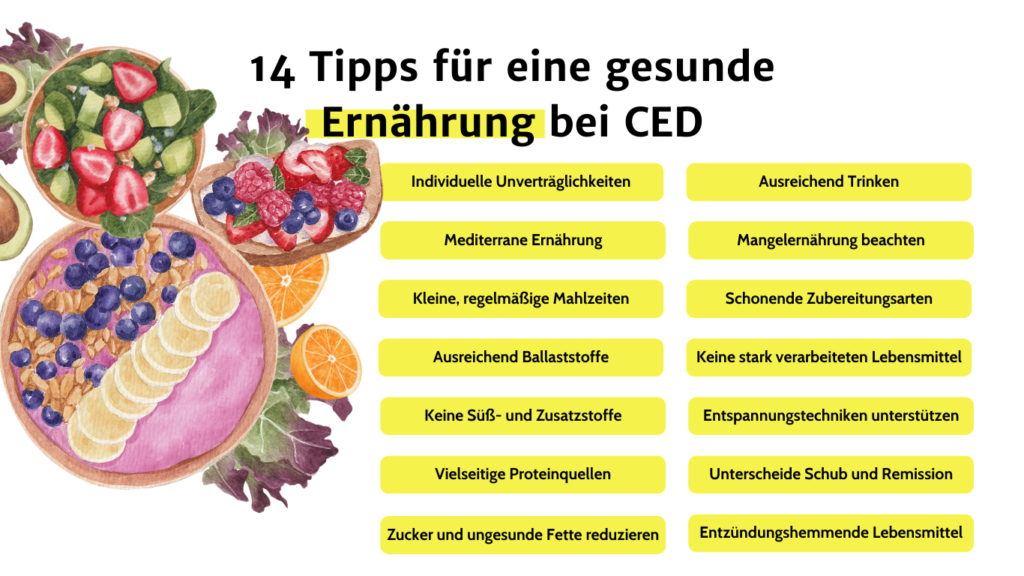
- 14 tips for a better diet with IBD
- 1. recognize & avoid individual intolerances
- 2 The benefits of the Mediterranean diet for IBD
- 3. stick to small, regular meals
- 4. dietary fiber: Which ones are good for the gut?
- 5. avoid artificial sweeteners and additives
- 6 These protein sources are particularly well tolerated by people with IBD
- 7. reduce sugar and unhealthy fats for a healthy diet with IBD
- 8. how much liquid should you drink every day?
- 9. correct management of malnutrition in IBD
- 10. gentle preparation - how to keep your food healthy
- 11. avoid highly processed foods
- 12. use relaxation techniques for support
- 13th relapse vs. remission - How to adapt your diet for IBD
- 14. anti-inflammatory diet for IBD
- Sources
Why is a healthy diet so important for IBD?
A healthy Nutrition for IBD can help to alleviate symptoms & relieve the bowel. In this blog post you will find important tips and recommendations for optimally adapting your diet to your needs with IBD.
The disease poses numerous challenges for those affected, especially when it comes to nutrition. One Balanced and well-tolerated diet can, however, make a significant contribution to positively influencing the course of the disease and alleviating symptoms.
14 tips for a better diet with IBD
1. recognize & avoid individual intolerances
Everyone reacts differently to different foods. You can have a Food diary to find out which foods you tolerate well and which you do not. This helps to identify and avoid individual intolerances. For example, many people with IBD develop a lactose intolerance, especially during an inflammatory flare-up.
2 The benefits of the Mediterranean diet for IBD
The Mediterranean diet is considered to be particularly well tolerated by people with IBD. It is based on plenty of vegetables, fruit, wholegrain products, pulses, nuts and olive oil. Supplement your diet with moderate amounts of fish and lean meat.
3. stick to small, regular meals
Instead of eating large meals that can put a strain on your digestive tract, spread your food intake over 5-6 smaller meals throughout the day. This helps to keep blood sugar levels stable and relieve the digestive system.
4. dietary fiber: Which ones are good for the gut?
Dietary fiber is important for intestinal health, but should be consumed in moderation and well tolerated. Prefer soluble fiber, which can be found in oats, apples and carrots, for example. They are gentler on the intestines and promote healthy intestinal flora.
5. avoid artificial sweeteners and additives
Artificial sweeteners such as aspartame or sucralose as well as additives such as emulsifiers and thickeners can have a negative impact on intestinal health. Therefore, reduce the consumption of such substances and choose natural alternativessuch as honey or maple syrup.
6 These protein sources are particularly well tolerated by people with IBD
Protein is essential for the Cell regeneration and the Immune system. Use a variety of protein sources such as eggs, lean meat, fish, pulses and dairy products. Make sure you choose well-tolerated varieties, especially if you are on a vegan diet.
7. reduce sugar and unhealthy fats for a healthy diet with IBD
Sugar and unhealthy fats can promote inflammation. Focus on healthy fats from nuts, seeds and high-quality vegetable oil. Sugar should be reduced as far as possible and replaced by natural sweeteners such as honey or maple syrup.
8. how much liquid should you drink every day?
Sufficient fluid intake is important to keep the bowels moving and avoid constipation. Drink mainly Water and unsweetened teas. Avoid sugary and carbonated drinks.
9. correct management of malnutrition in IBD
Malnutrition is a common problem in IBD. Inflammation and restricted food intake can lead to a lack of important nutrients. Nutrients come. Pay particular attention to the intake of Vitamin B12, Iron, Zinc, Calcium and Vitamin D. In some cases, it may be necessary to supplement the diet with food or food supplements. Regular blood tests can help, Nutrient deficiencies and treat them at an early stage.
10. gentle preparation - how to keep your food healthy
Cook your food at low temperatures and with little water and fat to Preserve nutrients and the Facilitate digestion. Avoid fried and spicy foods.
11. avoid highly processed foods
Processed foods often contain additives such as emulsifiers and thickeners, which Inflammatory processes in the intestine can promote. Examples include fast food, ready meals and highly processed snacks. Instead, opt for fresh, unprocessed foods.
12. use relaxation techniques for support
Stress can exacerbate the symptoms of IBD. Relaxation techniques such as yoga, meditation or progressive muscle relaxation can help, Reduce stress and thus also the Support digestion. You can also read our blog post on relaxation with IBD.
13th relapse vs. remission - How to adapt your diet for IBD
During an acute attack, the intestines are particularly sensitive and irritable. Easily digestible, gentle foods are beneficial here. In the remission phase, on the other hand, the diet can be more varied and rich in fiber to strengthen and support the intestines.
Nutrition during a relapse:
- Easily digestible foods: white bread, rusks, rice, boiled potatoes, bananas, rusks, steamed vegetables such as carrots or zucchini
- Lean meat and fish: Chicken, turkey and white fish are easily digestible and rich in protein.
- Avoid high-fiber and high-fat foods: raw vegetables, whole grain products, legumes, fried foods
- Make sure you drink enough fluids: Water, clear broths, unsweetened teas
- Red and processed meat can promote inflammation and be difficult to digest.
- Hot spices can irritate the intestinal mucosa.
- Carbonated drinks: Can cause flatulence and discomfort.
- Sugar and refined carbohydrates: Can promote inflammation.
- Coreway tip: Baby porridge, packets of low-fat chicken soup and oatmeal with banana have always helped me well
Nutrition in the remission phase:
- Variety and fiber: whole grain products, fresh fruit and vegetables, legumes
- Healthy fats: nuts, seeds, olive oil
- Protein-rich foods: fish, lean meat, eggs, fermented dairy products
Stick to a balanced diet according to the principles of German Society for Nutrition (DGE)
Coreway tip
14. anti-inflammatory diet for IBD
During a flare-up or in the remission phase, anti-inflammatory foods can alleviate the symptoms and support the healing process. These include
- Psyllium husks: Help regulate digestion and are rich in fiber.
- Turmeric powder: Contains curcumin, which has anti-inflammatory properties.
- Ginger: Can reduce inflammation and aid digestion.
- Omega-3 fatty acids: contained in oily fish, linseed and walnuts, have an anti-inflammatory effect.
- Green leafy vegetables: Spinach and kale are rich in antioxidants and anti-inflammatory.
- Prebiotics and probiotics can help to improve the intestinal flora and support intestinal health.
Every person with IBD is different, so it is important to have a Nutrition plan that is tailored to your specific needs and symptoms. Listen to your body, try out what is good for you and consult a specialist if necessary. Nutritionist or your doctor. Through the the right choice of food and a conscious nutrition With IBD, you can not only alleviate your symptoms, but also improve your general well-being.
Sources
- DGE - German Society for Nutrition: www.dge.de
- Study: Nutrition & IBD https://www.ncbi.nlm.nih.gov/pmc/articles/PMC7878254/
- Overview of anti-inflammatory foods https://www.healthline.com/nutrition/anti-inflammatory-diet-101
Also Sport can have a significant impact on your IBD. Read our article: Sport despite IBD: 12 tips for an active and healthy lifestyle
 Deutsch
  English
  Español
  Français
  Português