
- Why is exercise so important for IBD?
- 12 tips for exercise with IBD - Crohn's disease & ulcerative colitis
- 1. choose the right sport
- 2. listen to your body
- 3. start slowly and increase cautiously
- 4. regularity instead of intensity
- 5. drink enough
- 6. adjust your diet
- 7. avoid overexertion
- 8. use relaxation exercises
- 9. plan conscious breaks
- 10. no sport during a relapse
- 11. discuss your sports program with specialists
- 12. enjoy the movement!
- Conclusion: Sport with IBD is worthwhile!
- How did you like this article?
Why is exercise so important for IBD?
Regelmäßige Bewegung bei chronisch entzündlichen Darmerkrankungen (CED) wie Crohn's disease and Ulcerative colitis kann helfen, Alleviate symptoms and the increase general well-being. In diesem Beitrag geht es darum, wie Sport bei CED deren Symptome positiv beeinflussen kann und worauf es zu achten gilt.
However, it is not always easy for those affected to integrate sport into their everyday lives. The challenges are varied and often closely linked to the disease itself.
Typical hurdles for sport with IBD
- Episodes of illnessAcute phases with severe abdominal pain, diarrhea and exhaustion make physical activity difficult.
- Low energy levelChronic fatigue is a frequent companion of IBD and reduces motivation and performance.
- Nutrient deficiencyMalabsorption can lead to deficiency symptoms that reduce physical resilience.
- Side effects of medicationMany IBD medications can cause muscle wasting or bone weakness.
- Mental stressThe emotional stress caused by the illness can make it difficult to motivate yourself to exercise.
- Individual limitsEvery person with IBD has different exercise limits - the right amount of exercise needs to be found.
Exercise is still worthwhile - and studies show that!
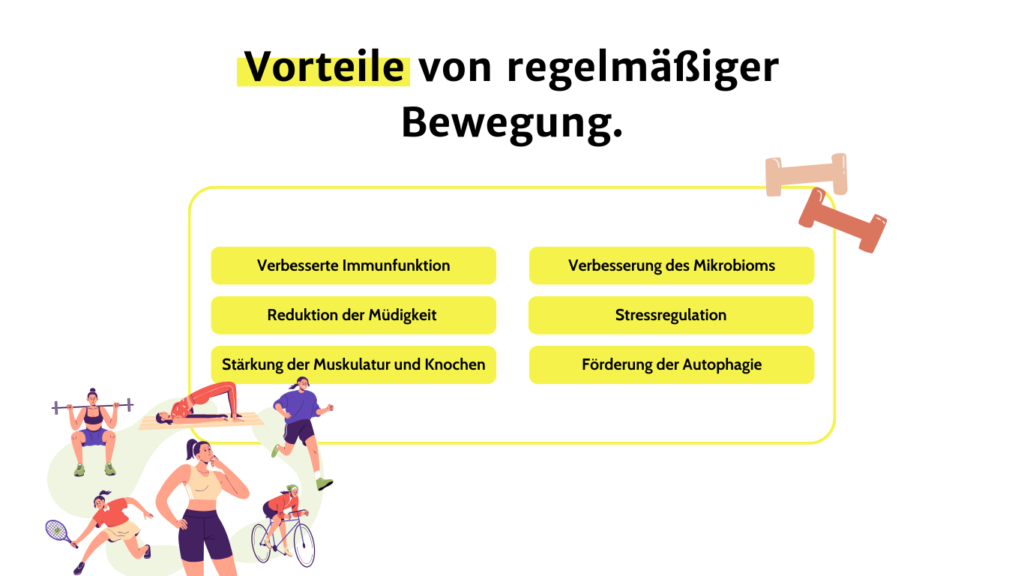
Benefits of exercise for IBD:
- ✅ Strengthening the immune system
- ✅ Reduction of fatigue
- ✅ Maintaining muscle mass and bone density
- ✅ Promotion of autophagy (cellular cleansing processes)
- ✅ Positive effect on the microbiome and the intestinal barrier
- ✅ Stress reduction & emotional well-being
12 tips for exercise with IBD - Crohn's disease & ulcerative colitis
1. choose the right sport
Not every sport is equally suitable. Focus on gentle forms of exercise such as:
- Walking
- Cycling
- Swimming
- Yoga or Tai Chi
These activities are easy on the joints, are easy to control in terms of intensity and hardly put any strain on the digestive tract.
2. listen to your body
If you feel pain, exhaustion or discomfort, give yourself a break. Overexertion can be counterproductive - your body will show you what is currently possible.
3. start slowly and increase cautiously
Give your body time to get used to the new exercise. Start with short units (e.g. 10 minutes) and increase week by week.
4. regularity instead of intensity
Regular, moderate exercise is better than infrequent intensive sports sessions. Three to four sessions per week with moderate exertion are ideal - even short walks count!
5. drink enough
People with IBD often have an increased risk of dehydration. Therefore, drink:
- Before sport
- During the activity
- And afterwards, drink plenty of water or electrolyte-containing drinks
6. adjust your diet
Die richtige Nutrition unterstützt deine sportliche Leistungsfähigkeit.
Before training:
- Leicht verdauliche Mahlzeiten (z. B. Banane, Haferschleim)
After training:
- Protein-rich snacks for muscle recovery (e.g. yogurt, cottage cheese, nut butter)
👉 Also read our article: 14 nutrition tips for IBD
7. avoid overexertion
Intense exercise can exacerbate symptoms or even trigger relapses. Therefore, ensure moderate intensity and regular rest periods.
8. use relaxation exercises
Yoga, Tai Chi oder progressive Muskelentspannung wirken doppelt positiv:
- Gentle exercise for the body
- Simultaneous calming of the nervous system and stress reduction
9. plan conscious breaks
Short recovery periods between exercises help your body to regenerate - especially if you suffer from chronic fatigue due to IBD.
10. no sport during a relapse
Take it easy during an acute flare-up. Replace intensive sport with gentle exercise such as:
- Stretching
- Short walks
- Breathing exercises
11. discuss your sports program with specialists
Talk to your doctor about this:
- Suitable sports
- The right load
- Any necessary adjustments to your medication or diet
12. enjoy the movement!
Choose activities that you enjoy. Sport should not be an additional burden, but a positive part of your life with IBD.
Conclusion: Sport with IBD is worthwhile!
Regular exercise can have a positive impact on the course of your illness and improve your quality of life. Even if you don't have the same amount of energy every day - every movement counts!
💡 Coreway Tip: It's not about achieving peak athletic performance, but about keeping moving - at your own pace, with your own body.
Read more:
👉 14 nutrition tips for IBD
👉 Relaxation with IBD: the best techniques for coping with stress
Sources:
- Wenzl, H.H. (2018): Physical activity with IBD, J. Gastroenterol. Hepatol. Erkr. DOI link to the study
- Cramer H. et al (2017): Yoga vs. written self-care advice for ulcerative colitis, Aliment Pharmacol Ther.
 Deutsch
  English
  Español
  Français
  Português