
- Why is restful sleep so important for IBD?
- The 12 best tips for restful sleep with IBD
- 1. establish a sleep rhythm for restful sleep with IBD
- 2. your bed is for sleeping - not for resting
- 3. light dinner for more restful sleep with CED
- 4. reduce naps - how to stay tired for the night
- 5. avoid caffeine - the right time for coffee & co.
- 6 The optimum room temperature for restful sleep with IBD
- 7. fill up on daylight - how to regulate your sleep rhythm
- 8. reduce cell phone time in the evening - avoid blue light
- 9. avoid alcohol - why it harms your sleep
- 10. develop an evening routine - how to achieve restful sleep with IBD
- 11. sports not in the evening - when is the best time to exercise
- 12. control CED symptoms & pain
- Conclusion for restful sleep with IBD
- Sources
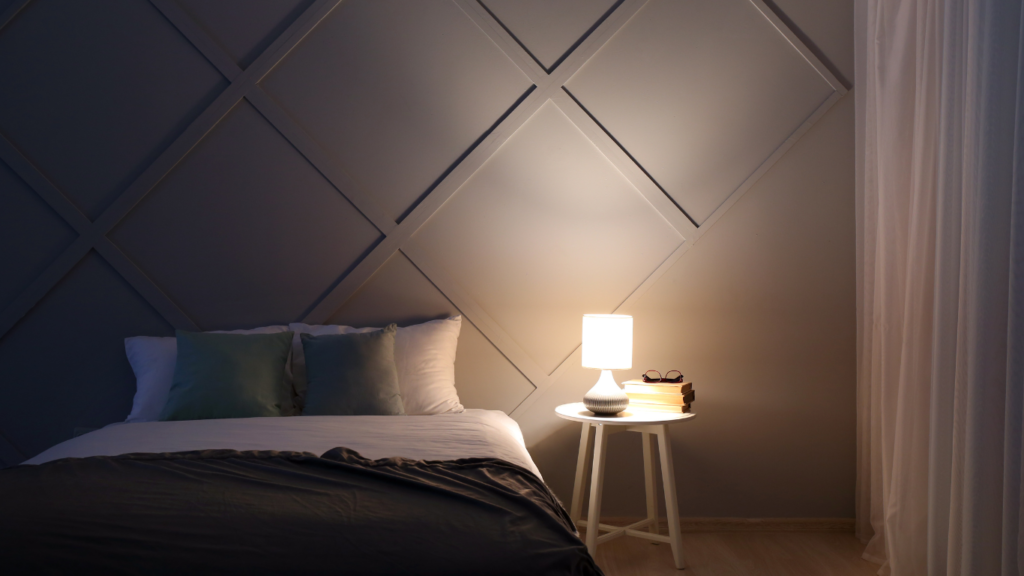
Why is restful sleep so important for IBD?
Restful sleep with IBD is one of the most most important pillars of our health. If we sleep well, our body can regenerate better, we are more efficient and emotionally more balanced.
Sufficient, high-quality sleep is also extremely valuable in the case of IBD: it reduces the risk of relapses, surgery or secondary illnesses such as depression.
Nevertheless, IBD often leads to sleep problems and sleep disorders. The latest studies show that 70 percent of people with IBD suffer from sleep problems - both during relapses and in remission.
During an acute attack, symptoms often also occur at night. This often costs valuable sleep. But even people with IBD in remission experience sleep problems more frequently than healthy people. The reasons for this are subliminal inflammation suspected in the body.
In the worst case, poor sleep can then have a real Vicious circle can be triggered. It leads to new episodes and symptoms, which then further impair sleep.
But you don't have to sit idly by and watch this vicious circle unfold. Just a few small changes can make a big difference and not only improve your night's sleep, but also have a positive impact on the course of your IBD.
The 12 best tips for restful sleep with IBD
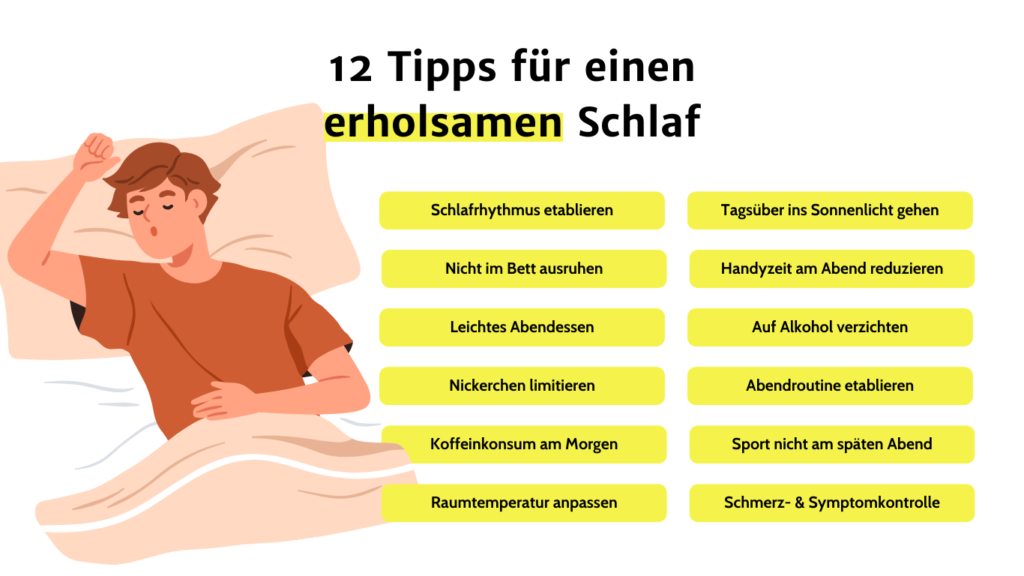
1. establish a sleep rhythm for restful sleep with IBD
Try to establish fixed sleeping times. Regularly going to bed at the same time promotes better quality sleep and also supports your general health. A consistent sleep rhythm helps you to stabilize your circadian rhythm, the body's internal clock. This makes it easier to fall asleep and stay asleep as the body gets used to fixed times. In addition, regular bedtimes help to extend the deep sleep phases and thus improve recovery during the night.
2. your bed is for sleeping - not for resting
Try not to rest in bed during the day if you need a break. For a good night's sleep, the bed should be associated exclusively with sleeping. If the bed is often used for resting during the day, this can affect the quality of sleep and lead to sleep disorders. A clear distinction between day and night routines helps to stabilize the sleep-wake rhythm and sleep better. It's best to find an alternative place to take breaks during the day. Try to relax on a sofa or armchair, for example, in order to save the bed as a place to relax and sleep at night.
3. light dinner for more restful sleep with CED
Abends eher leichte Mahlzeiten zu sich zu nehmen, kann die Schlafqualität erheblich verbessern. Schwere und fettige Speisen belasten die Verdauung und können das Einschlafen erschweren. Leichte, gut verdauliche Lebensmittel wie Gemüse, mageres Protein und komplexe Kohlenhydrate hingegen sind schonender für den Magen-Darm-Trakt und fördern eine ruhige Nacht. Eine leichte Abendmahlzeit verhindert außerdem, dass der Körper während des Schlafens hart arbeiten muss, um die Nahrung zu verarbeiten. Der Blutzuckerspiegel bleibt stabil und der Schlaf wird weniger unterbrochen.
4. reduce naps - how to stay tired for the night
Sleeping frequently or for long periods during the day can disrupt the natural sleep-wake rhythm and make it difficult to fall asleep in the evening. Your body may then have difficulty resting in the evening because it has already had sleep during the day. This can also lead to a shift in your internal clock, which affects the quality of your sleep and can lead to tiredness during the day. Nevertheless, one-off short, planned naps of no more than 20-30 minutes a day can be helpful if you have a particularly stressful day with lots of symptoms.
5. avoid caffeine - the right time for coffee & co.
Caffeine is a stimulant that increases alertness and reduces fatigue by blocking the action of adenosine, a sleep-promoting substance in the brain. If caffeine is consumed in the afternoon or evening, this can disrupt the natural sleep-wake rhythm and make it considerably more difficult to fall asleep. Caffeine is broken down very slowly by the body, which means that you are less tired in the evening and may have difficulty falling asleep. If you consume caffeine in the morning, you can use its stimulating effect to start the day full of energy without affecting your sleep at night.
Caffeine has a so-called half-life of 6 to 8 hours, which means that your body breaks down half of the caffeine consumed within 6 to 8 hours.
Coreway-Insights
6 The optimum room temperature for restful sleep with IBD
A cool room temperature is important for a good night's sleep. Your body naturally cools down as you fall asleep. A cooler environment supports this process, which in turn makes it easier to fall asleep. A room temperature that is too warm, on the other hand, can lead to restlessness and frequent waking, as the body has difficulty cooling down. Ideally, the bedroom temperature should be between 16 and 19 degrees Celsius. A pleasant coolness also promotes the deep sleep phases, which are particularly important for your recovery.
7. fill up on daylight - how to regulate your sleep rhythm
Natural light regulates the circadian rhythm, the body's internal clock that controls the sleep-wake cycle. Sunlight helps to regulate the production of melatonin, the sleep-promoting hormone. During the day, sunlight reduces melatonin production, making you more alert and energetic. In the evening, melatonin production increases, which makes it easier to fall asleep. Sunlight also promotes the production of serotonin, a hormone that improves mood and also plays a role in the sleep-wake cycle. By regularly spending time outdoors and getting enough sunlight during the day, you can support healthy and restful sleep.
8. reduce cell phone time in the evening - avoid blue light
Cell phones and other electronic devices emit blue light, which inhibits the production of melatonin, the hormone that promotes sleep. This can make it difficult to fall asleep and affect the quality of sleep. In addition, stimulating content such as news, games or social media can keep the brain active or agitated and make it difficult to calm down. To promote restful sleep, try to avoid screens for at least an hour before bedtime and instead prioritize relaxing activities such as reading or meditating. This will allow your body to better prepare for sleep.
9. avoid alcohol - why it harms your sleep
Avoiding alcohol can significantly improve the quality of sleep. Although alcohol initially has a relaxing effect and can make it easier to fall asleep, it disrupts the structure of sleep and reduces the deep sleep phases. Alcohol leads to frequent waking during the night and thus also reduces the REM sleep phases, which are important for mental recovery. In the long term, regular alcohol consumption worsens the quality of sleep and can lead to chronic sleep problems.
10. develop an evening routine - how to achieve restful sleep with IBD
A fixed sequence of calming activities signals to the body that it is time to prepare for sleep. This helps to calm the mind and ease the transition from wakefulness to sleep. Activities such as reading, gentle stretching or a warm shower can help you to reduce stress and create a relaxed atmosphere. A regular evening routine also helps to stabilize the sleep-wake rhythm, making it easier to fall asleep and stay asleep (see also point 1).
11. sports not in the evening - when is the best time to exercise
Intensive körperliche Aktivität erhöht deinen Puls sowie deine Körpertemperatur, was die Entspannung und das Einschlafen erschwert. Zudem setzt der Körper beim Sport Stresshormone wie Adrenalin frei, die wach und aufmerksam machen. Diese Effekte können den natürlichen Schlaf-Wach-Rhythmus stören und das Einschlafen verzögern. Achte am besten darauf, mindestens zwei bis drei Stunden vor dem Schlafengehen auf intensive körperliche Betätigung zu verzichten. Leichte körperliche Aktivitäten wie Yoga oder Spazierengehen können jedoch beruhigend wirken und die Schlafvorbereitung unterstützen.
12. control CED symptoms & pain
Restful sleep is often difficult to achieve with IBD, especially during flare-ups. Uncontrolled pain and unpleasant symptoms such as abdominal cramps and diarrhea can significantly disrupt sleep, lead to frequent awakenings and reduce the quality of sleep. Targeted symptom control, for example through medication, an adapted diet or suitable relaxation techniques, can reduce night-time discomfort and thus enable more restful sleep. If you are unsure which measures are right for you, you can discuss this with your doctor. At the same time, you can also simply try out some "aids". Perhaps a warm shower will help you against stomach cramps or you can find a relaxation method that suits you.
Relaxation method: Progressive muscle relaxation according to Jacobsen
The progressive Muskelentspannung nach Jacobsen ist eine Entspannungstechnik, die darauf abzielt, durch systematisches An- und Entspannen bestimmter Muskelgruppen einen Zustand tiefer Entspannung zu erreichen.
This is how progressive muscle relaxation works:
- Assume resting positionTake a comfortable sitting or lying position and close your eyes.
- Focus on breathingTake a few deep breaths first to calm yourself down and focus on your own body.
- Tense muscle groupsStart with a muscle group of your choice, e.g. your hands. Tense these muscles consciously and firmly for about 5-10 seconds.
- Relax muscle groupsAfter tensing, let go of the muscles and relax them for about 20-30 seconds. During the relaxation phase, concentrate on the feeling of relaxation and the differences to the previous tension.
- Go through from head to toeThese steps are repeated systematically for different muscle groups. The typical sequence is: Hands, arms, shoulders, neck, face, chest, abdomen, back, buttocks, legs and feet.
- Total body relaxationOnce you have gone through all the muscles, concentrate on relaxing the whole body for a few minutes.
By practising progressive muscle relaxation regularly, you can learn to recognize and reduce tension in your body more quickly, leading to a general feeling of relaxation and well-being. This technique is particularly helpful for stress, anxiety and sleep disorders, as it can put the body and mind in a state of deep calm.
Coreway tip
Conclusion for restful sleep with IBD
💛 Regular routines and the Proper sleep hygiene support restful sleep with CED in the long term.
We hope you enjoyed the article. We would be delighted to receive feedback from you.
Here you can find out more relaxation methods for establishing restful sleep with IBD: Relaxation with CED - The best techniques for coping with stress
Sources
- Chinoy ED, Duffy JF, Czeisler CA. Unrestricted evening use of light-emitting tablet computers delays self-selected bedtime and disrupts circadian timing and alertness. Physiol Rep. 2018 May;6(10):e13692. doi: 10.14814/phy2.13692. PMID: 29845764; PMCID: PMC5974725.
- Perry GS, Patil SP, Presley-Cantrell LR. Raising awareness of sleep as a healthy behavior. Prev Chronic Dis. 2013 Aug 8;10:E133. doi: 10.5888/pcd10.130081. PMID: 23928458; PMCID: PMC3741412.
- Storr, M. Sufficient sleep protects against ulcerative colitis. MMW - Advances in medicine 156, 52 (2014). https://doi.org/10.1007/s15006-014-3806-z
 Deutsch
  English
  Español
  Français
  Português